It’s 2026, and everyone is making New Year’s resolutions.
But if there’s one skill I’d recommend to you, that despite all the polarization, the rise of AI, and economic issues… it’ll give you an insane advantage… I’m talking about selling.
You probably rolled your eyes, and I don’t blame you. But we have entered an era where this ability is your ticket to survival in a changing job market where AI automation and shiny new AI tools flood every feed.
Because in a world of deafening noise, being ‘talented’ is not enough. If you cannot get people to listen, you’re essentially invisible. And in the age of AI tools that can write, code, and design, your voice – your story – is what separates you from the noise.
Look, we grew up with a lie. The lie that the best product wins. Or that the person who works the hardest or is the smartest will succeed in the labor market.
But is the richest person you know the smartest person you know?
Probably not.
Is the most famous actor the best actor?
Definitely not.
The world is not a meritocracy. It is a Sell-ocracy.
Imagine I offer you two glasses of water and I charge you $2 for them. There’s nothing special about it, just plain water.
You would probably be like, “Are you outside your mind?” Where are we? At the Airport?
Now, what if I put this plain water in a beer can? That way, it looks like you’re drinking beer. It’s fun, it’s edgy.
You will be like, “shut up and take my money.
Well, that’s exactly what Liquid Death did. They took a boring product, repackaged it to make it look edgy, and added a compelling narrative that by drinking this water, you’re protecting the environment.
As a result, they built a billion-dollar company.
All because the founders were masters in Sales & Propaganda.
And here’s what matters: AI can automate processes, but it can’t create meaning. The founders didn’t win because of algorithms; they won because they understood human psychology. They sold identity, not water.
Let’s see another example.
Despite all the scandals and his connections to Epstein, Trump has been going strong in his second term, and who knows! He might keep the same rhythm in the third term. Considering, of course, that his health allows it. Keep in mind that he’s very old.
We could look at this situation from different perspectives… historical, sociological, psychological… but I think it all comes down to sales and propaganda.
Recently, Jake Paul, an amateur boxer, fought against Anthony Joshua, the retired heavyweight champion. To everyone’s surprise, Joshua won!!! And fairly easily. It was a sad day for many kids around the world.
Speaking of young fans, Andrew Tate, the former champion, the ultimate fighter, if Bojka were a real person… lost a boxing match, but unlike Jake, he fought an amateur boxer.
Nevertheless, despite being mediocre fighters, they walked away with millions. And why?
Yes, exactly…
They’re masters of sales and propaganda.
They know how to frame attention in a world where algorithms decide what people see. They understand that “selling” is not a dirty word… It’s survival.
So the best product or person doesn’t necessarily win. It’s more about how it is presented.
And now that AI is writing headlines, editing videos, and generating campaigns, presentation will only matter more. Automation will make average work cheap, and extraordinary storytelling priceless.
In this regard, things will get worse in 2026. You’ll have more competition, so you’ll need to find better ways to stand out.
Some of the most powerful corporations on Earth are investing heavily in AI, so it will evolve rapidly, which means it will be much easier for people to get into coding, writing, content creation, marketing, etc.
Plus, you can customize your own AI model and make it more specialized.
Apparently, you don’t even need technical knowledge. According to this platform, AnythingLLM, you can effortlessly train an AI. I haven’t tried it yet, but it seems promising.
So lots of people will be much more effective at their jobs, even if they have less experience than you.
Now, I know that there’s a lot of talk that we are in the AI bubble, and maybe we are, but even if the bubble eventually pops and most of those startups and even some big corporations are destroyed, still, there will be some lone winners, and as I said, you can create your own AI.
Whether we like it or not, AI will continue to affect our lives, so the best thing is to learn how to use it and, most importantly, be aware of its negative effects.
Because every new technology will bring chaos in the beginning.
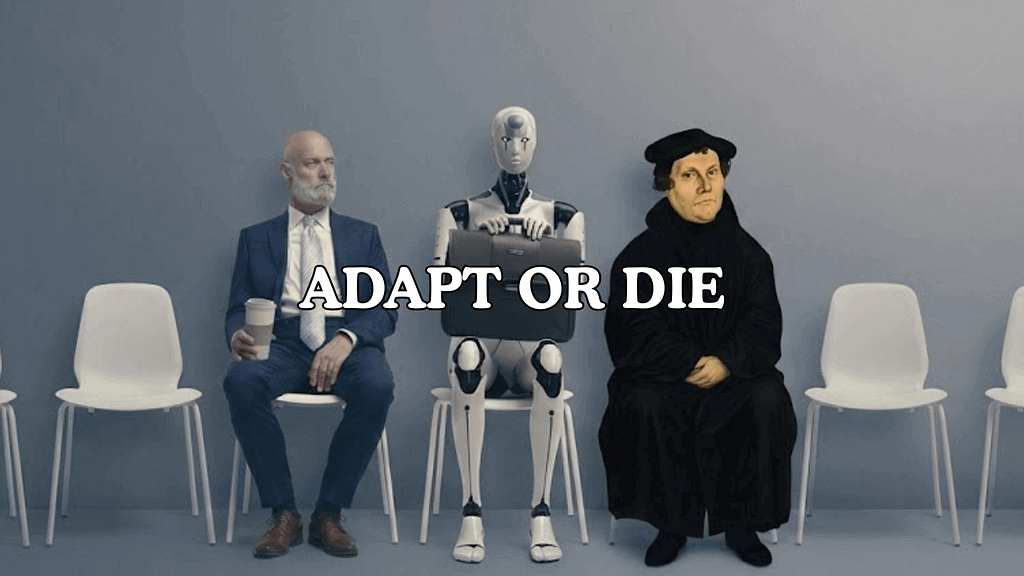
In the year 1440, Johannes Gutenberg invented the printing press. It is, without a doubt, one of the most important inventions of all time.
However, before the printing press, life was simple; it sucked, but it was simple. The Church and other authorities told you what was true, and you believed it.
Then suddenly, information was readily available. Anyone could print a pamphlet or a book and share their knowledge or their bs.
So, in the beginning [probably the first 50-70 years], people were facing a tsunami of information. You had unverified or mistranslated books, plus some guy with a weird theory could print pamphlets and share them in town. If it were a compelling story, it would spread like the plague.
As a commoner, it was up to you to decide what was actually true.
And when people are confronted by so much information, they usually don’t get smarter. They’re so overwhelmed by this new way of living that they simply turn off their critical thinking. They spend more and more time on autopilot. They do things, but they don’t really pay attention to what they’re doing.
To put it simply, AI is like the printing press on steroids. It has and will make our lives dramatically more complicated.
But despite all of this, there are people who thrive in chaos.
A typical example was Martin Luther. He was a German Monk and a doctor of Theology.
In the year 1510, he had the chance to visit Rome and was appalled by the rampant corruption.
You know, the clergy used to tell people that once you die, your soul goes to purgatory, a place where you’re waiting to be judged by God. But if you gave money to the Church, then they could reduce the time you spend in purgatory; You could also pay so that a loved one who died could leave that place earlier.
They even had a clever Ad, “As soon as a coin in the coffer rings, a soul from purgatory springs.”
Now here’s the key. When he saw people falling for this scam, Luther didn’t judge them.
He judged the system, the doctrine, but not the ordinary people.
He respected them enough to believe they deserved the truth.
So he wrote and spoke for the masses. Most importantly, he crafted a very compelling narrative. He was like, “If you truly repent, if you truly walk away from sin and embrace God, that’s enough to have its forgiveness. Forget about the money, forget about the bureaucrats, it’s just you and God.”
I’m not a religious person by any means, but I like this approach, and I can see why he had so much impact.
He sold people on hope. That’s what every great communicator does, and that’s what you’ll need to do in an era where AI floods people with fear about job loss, automation, and irrelevance.
What does this mean for us?
Just like Luther, we are dealing with people washed away by a tsunami of information. And when you see people believing deepfakes, buying dumb products, or falling for obvious scams, it’s easy to get cynical. To think, “They’re getting the life they deserve because they’re idiots.”
But if you think like that, you will fail. Because you cannot sell or connect with people you despise.
So, to win this year, you must be aware that they have to make hundreds of choices every single day. So you do the hard work for them, you’re like, “Look, I know you have this painful problem. I know you have tried this, and this, and this, and nothing worked. But it all comes down to one choice.”
You’re selling clarity. And no AI, no technology can give the guidance in the way that a compassionate, insightful person can.
So yes, you can set New Year’s resolutions to become smarter or fitter, but I’d also recommend setting a goal to be the person who makes sense in a world that doesn’t. In other words, become a good salesman.
