Do you ever wonder…
Why you say yes to things you don’t really care about?
Or why you trust a stranger in a suit more than your own intuition?
Me neither.
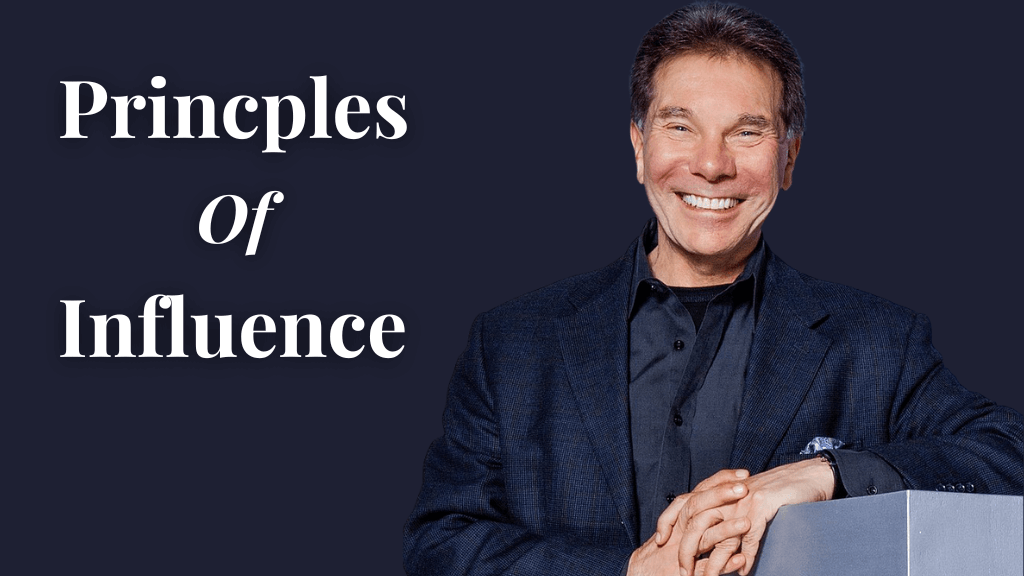
But Robert Cialdini did.
He has spent 40 years trying to decode what makes people buy or comply.
He discovered that while there are thousands of ways to get someone to say yes, nearly all of them rely on the same 7 psychological principles.
So in this video, I’ll take you behind the curtain to show how easily we can all be influenced.
#1 Reciprocity
In a study, participants were asked to complete a tedious, one-hour survey.
One group was told, “We’ll give you fifty dollars after you finish the survey.”
The other group got a different deal. They received a five-dollar check up front, and they were told, “This is just a gift. You can keep it whether you do the survey or not.”
The results were surprising.
Only 23% of the first group filled out the survey. Meanwhile, 52% of the other group completed it.
So when someone does something nice for us — even if it’s small or something we didn’t ask for — we instantly feel like we have to return the favor.
Now, if you want reciprocity to have a big impact, then it needs to have 3 qualities:
It needs to be Meaningful – The gift or gesture has to matter to them. But it doesn’t have to be expensive or flashy.
For example, let’s say you’re staying at a hotel and you receive a handwritten note and a favorite snack from the staff after you’ve casually mentioned liking it.
Would that drive you to leave a bigger tip or return to this hotel?
Probably yes.
The second quality is that it needs to be unexpected, because when the gift is unpredictable, people are likely to perceive it as a generous gesture.
In a university fundraising study, donors who received a small, unexpected gift (a postcard or candy) gave twice as much as those who didn’t receive anything.
The final quality is that it needs to be personalized—you need to tailor the gift to the person.
A teacher can inspire a student far more effectively by noticing something specific, rather than offering a generic compliment. She could say, “I saw how you helped your classmate today, good job.”
#2 Social Proof
Social proof is a mental shortcut that saves us from over-analyzing every choice we make.
When we see a crowded restaurant, a product with thousands of 5-star reviews, or a movie trailer with millions of views, we instinctively think, “If everyone else likes it, it must be good.”
This works because humans are wired to look at others to determine what’s acceptable, worthwhile, or safe. In marketing, this is why testimonials, reviews, and “most popular” labels are so effective.
Now, Cialdini breaks down social proof into five primary types:
Expert – We are more likely to believe an endorsement made by an expert (or someone who looks like one)
Celebrity – Many people want to live like celebrities, so they’ll take their advice or buy what they recommend.
Other Users – This refers to regular customers who share their experiences. Think of testimonials, reviews, and ratings.
We value their opinion because they seem unbiased and relatable.
Marketers frame their product as a safe bet by saying things like Fastest-growing, Most Popular Now, and What others are watching.
Wisdom of the Crowd – When a large number of people adopt something, we often assume it’s the right choice.
Because we tend to assume other people are more knowledgeable than we are.
Wisdom of Your Friends – We are more likely to buy something recommended by our friends because we tend to trust their judgment and know they have our best interests in mind.
Social proof will have a higher impact when one of these conditions is met: Uncertainty, numbers, and similarity.
First, when people are unsure about what to do next, they look to others to make sense of things.
Second, when many people are doing something, the sheer volume of participants can feel like validation.
And third, social proof will resonate more with us when the behavior comes from people similar to us.
Here’s an interesting example: Informercial scriptwriter Colleen Szot made a subtle change to the standard call-to-action line.
She replaced “Operators are waiting, please call now” with “If operators are busy, please call again.”
This suggestion led people to believe that many were already interested in the product, making them more inclined to purchase it.
The result? The call volumes skyrocketed.
Cialdini warns that social proof can backfire. In one story, tourists ignored turquoise jewelry until the price doubled, then they rushed to buy, assuming higher demand meant higher value. That’s social proof mixed with the shortcut “expensive = good.”
Today, fake reviews online are a modern version of this false social proof.
#3 The Liking Principle
The Liking Principle taps into our basic desire for positive interactions. When we like someone, we are more likely to be influenced by them. Cialdini explains that four primary triggers make us more likable:
Similarity
The similarity doesn’t have to be profound – even small things can make a big difference.
When we encounter someone with shared interests, backgrounds, or values, we subconsciously perceive them as part of our “in-group,” which fosters instant rapport.
In a study, researchers found that people were far more likely to agree with someone if they shared a birthday, birthplace, or even a similar name. [1]
Salespeople often use this tactic by mentioning they went to the same school, prefer the same sports team, or even share the same taste in coffee.
Compliments
Sincere flattery works. It creates an instant sense of goodwill, making people feel appreciated and positive towards the giver.
In a classic study, people were more likely to comply with a request if the requester had first complimented them.
It worked even when they suspected it was part of the persuasion tactic.
For example, a salesperson or a waiter will compliment you on your choice, appearance, or decision-making skills.
Cooperation
Working with someone will shift the dynamic from “me vs you” to “Us against a problem.”
This is why people collaborating on a project are more likely to help each other afterward.
Cooperation can be as simple as a salesperson saying, “Let’s find something that fits what you’re looking for,” or “Let’s figure out what will work best for your needs.”
Another example is companies that use inclusive language, such as “Let’s build this together” or “We’ll make sure you get what you need.”
The Halo Effect
We prefer good-looking people… to a considerable extent.
Various studies have shown that we perceive attractive people as more intelligent, stronger, successful, and having higher moral character.
All of this is based only on their physical appearance. The halo effect goes beyond personal interactions.
Think of packaging design and product presentation. If it is attractive, we perceive it as of higher quality.
#4 Authority
The authority principle is about our instinct to trust those who appear to have more knowledge and power than we do
As we explained earlier, symbols of authority, such as titles, uniforms, and awards, have a profound influence over us.
In a chilling study, a fake doctor called nurses in a hospital and ordered them to give an unapproved dose of medication to a patient. [2]
The nurses fully understood the dangers of the treatment and were aware of the hospital rules that forbid these practices, yet 90% of them followed the orders.
Another interesting study shows a luxury car stalling at a green light.
People behind it waited an uncomfortable 15 seconds before hesitatingly tapping the horn. [3]
But what happened when they had an old car in front of them? They honked almost immediately.
If you want to influence others, remember that establishing yourself as an authority figure is crucial.
And pay attention so you don’t fall into the trap of believing someone just because of perceived authority.
#5 Scarcity
It’s one of the most powerful motivators because it triggers fear of missing out (FOMO).
The moment something becomes limited, the survival instinct kicks in, and suddenly, we feel compelled to have it.
Take one of the favorite studies of Cialdini:
Researchers offered people cookies from two jars—one with 10 cookies and the other with only 2.
They considered the cookies from the nearly empty jar as tastier. [4]
They were the exact same cookies, but scarcity made them more desirable.
This tendency doesn’t stop with food. It spills into everything from information to experiences.
Studies on censorship reveal that when certain books or movies are banned, they often become more popular. [5]
If something is forbidden, we want it even more.
Cialdini refers to this phenomenon as “The Forbidden Fruit Effect.”
Now, three biases make scarcity downright irresistible:
Loss Aversion: Nobel Laureate Daniel Kahneman explained how people are more motivated by the idea of losing something than by the prospect of gaining it.
Competition: When people compete for the same resource, the race to have it becomes more intense.
That’s why hotel flash messages say Only two rooms left! Or three people are looking at this room right now.
Exclusivity: You’ve noticed how something feels more valuable when only a select few people know about it.
A beef importer conducts an interesting experiment to test how exclusivity affects our behavior. [6]
They framed the pitch in three different ways and sent it to various groups:
The first group received a standard pitch outlining the main qualities of the beef and what sets them apart from other providers.
The second group heard that beef supplies were running low—a classic use of scarcity to induce urgency.
The third group received an “exclusive tip” that beef supplies were running low, but this information was not yet known to others.
They bought 6 times more beef than the other groups. So, it wasn’t just the scarcity of the product but also the scarcity of the information.
By framing the news as more exclusive, they tapped into customers’ desire to act on inside information.
#6 Unity
We all have a deep need to belong.
That’s why we divide the world into us vs them, and we tend to like or support people more if we perceive them as being part of our group.
Once we identify with a particular group, the effect is noticeable and powerful.
Research shows that even minor connections, such as sharing a birthday, hometown, sports team, or profession, can make us feel like we’re part of the same group and, therefore, that they’re on our side.
Three things reinforce the sense of unity:
Kinship Cues: We tend to be more generous and protective towards people we perceive as family, even if they’re not blood relatives. This can be triggered by referring to a group as a Team or Family.
Warren Buffett, for example, often refers to Berkshire Hathaway shareholders as his “Berkshire Family”.
It makes them feel like they’re part of a close-knit, trusted group, which makes them more likely to be loyal.
LocalIdentity: Have you ever met someone while traveling who’s from the same neighborhood, city, or school? Did it feel great?
Simply meeting someone in a random place can create an instant bond.
Politicians frequently use this tactic by mentioning their local roots and promising to represent “our community” in the best possible way.
Synchrony: Acting in rhythm can create a powerful feeling of unity.
This is why military squads or sports teams practice in sync. It makes the members more loyal and willing to give anything to the team.
Studies show that even moving in sync, such as walking in step or clapping in rhythm, can increase trust and cooperation.
So the next time you want to influence someone:
- Look for shared identities
- Mention common interests
- Use inclusive language
- Create a team-like atmosphere
#7 Commitment and Consistency
When people make a small commitment, they’re more likely to say yes to a larger request later on.
This works because of cognitive dissonance, that uncomfortable feeling we get when our actions don’t match our beliefs.
When we say yes to something, especially publicly, we feel an urge to stay consistent. It makes us see ourselves as reliable.
In a study, researchers went door-to-door in a California neighborhood and asked homeowners to display a small “Drive Safely” sign in their windows.
Almost everyone agreed. After all, it was a simple request. [7]
However, two weeks later, they came with a request to place a large, ugly “Drive Safely” sign on their lawns.
Surprisingly, 76% of those who had initially agreed to the request said yes to the billboard, compared to 17% of those who weren’t asked to commit the first time.
Here are some practical tips to get the most out of this principle:
- Begin with a simple request that lines up with your ultimate goal.
- Set the interaction so that other people know about their commitment. They can share those goals with their friends or post about them online.
- Design the journey that guides them through incremental steps. Each step reinforces their self-image and shows that they are a person who follows through.
- Offer praise or small rewards for each step they take. It reinforces their decision to be consistent and makes them feel good for staying on track.
FAQ About Principles of Influence
Who is Robert Cialdini?
He is a psychologist and researcher best known for his work on influence and persuasion. His books are considered classics in the field of behavioral science. He spent years observing real-world situations, from car dealerships to fundraising groups, to see how people are persuaded in everyday life.
What’s the difference between influence and persuasion?
Influence is the overall ability to shape someone’s behavior or decisions. Persuasion is one way of doing that… by using arguments, stories, or techniques to change someone’s mind. Influence is the broader concept; persuasion is one tool inside it.
Are Cialdini’s principles backed by science?
Yes. Each principle is rooted in psychology and supported by decades of experiments. They’re patterns of human behavior that repeat across cultures and situations.
How are these principles used in business?
Companies use them in marketing, sales, and customer service. For example, product reviews serve as social proof, discounts with deadlines utilize scarcity, and friendly sales staff rely on the likability principle. The key is that these methods work because they tap into automatic human responses.
Sources:
[1] Burger, J. M., et al. (2004). “What a Coincidence! The Effects of Incidental Similarity on Compliance.” Personality and Social Psychology Bulletin, 30(1), 35–43.
[2] Hofling, C. K., et al. (1966). “An Experimental Study in Nurse-Physician Relationships.” Journal of Nervous and Mental Disease, 143(2), 171–180.
[3] Doob, A. N., & Gross, A. E. (1968). “Status of Frustrator as an Inhibitor of Horn-Honking Responses.” Journal of Social Psychology, 76(2), 213–218.
[4] Worchel, S., Lee, J., & Adewole, A. (1975). “Effects of Supply and Demand on Ratings of Object Value.” Journal of Personality and Social Psychology, 32(5), 906–914.
[5] Brehm, J. W. (1966). A Theory of Psychological Reactance. Academic Press.
[6] Knishinsky, A. (1982). “The Effects of Scarcity of Material and Exclusivity of Information on Industrial Buyer Perceived Risk in Provoking a Purchase Decision.” Doctoral Dissertation, Arizona State University.
[7] Freedman, J. L., & Fraser, S. C. (1966). “Compliance Without Pressure: The Foot-in-the-Door Technique.” Journal of Personality and Social Psychology, 4(2), 195–202.
Viktorbuehler, Robert Cialdini, and Lars Kolind at ZURICH.MINDS 2012, licensed under CC BY-SA 3.0. Edited by Edison.

